Why is hoop so unique?
Aerial hoop is an aesthetic branch from circus and gymnastics. It involves the strength, flexibility, and aesthetics of gymnasts with the ability to bring spaces alive with performance aspects and creativity of the circus world (Farmer et al., 2024, Filho et al., 2016). Aerial hoop performances are unique and versatile. They require only a stable rigging point, and a small performance space (Cossin et a., 2022). This makes it accessible to be presented in various venues.
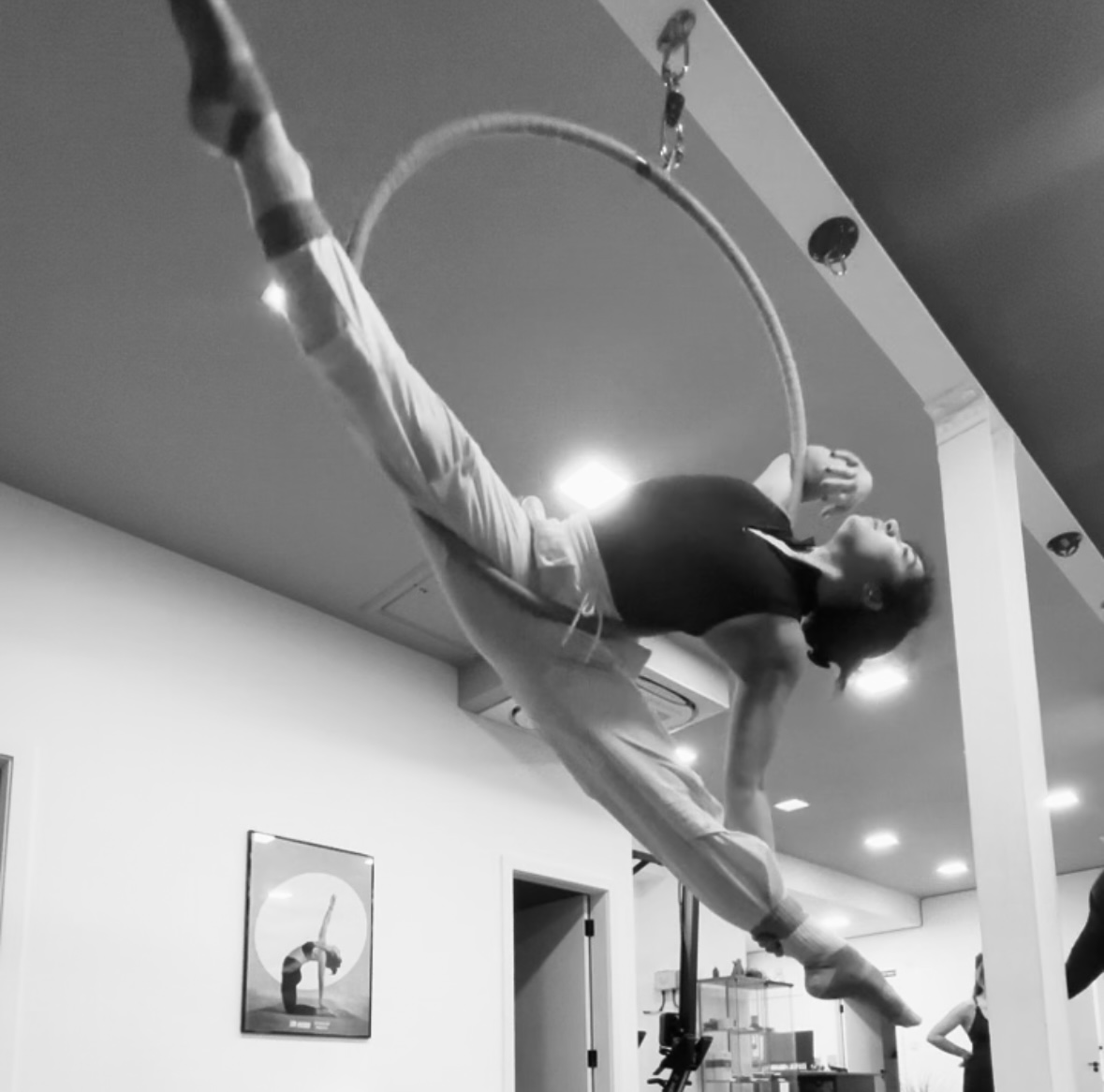
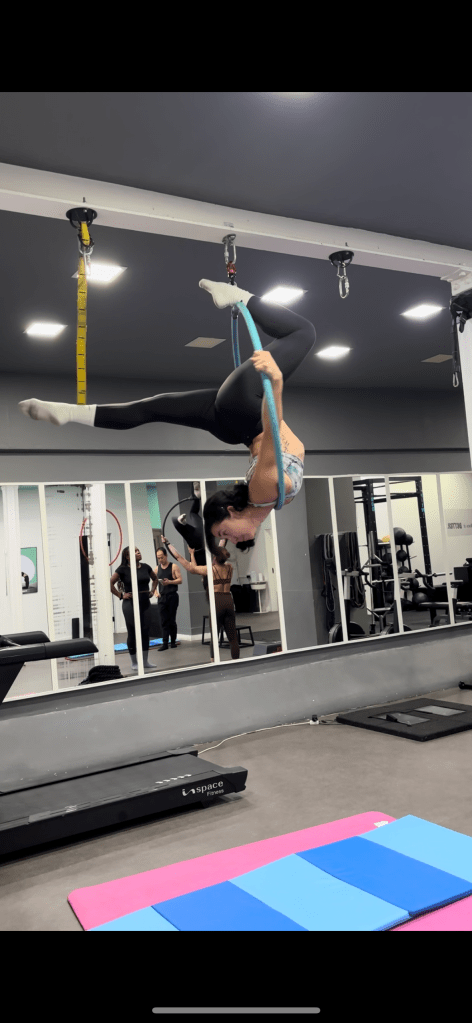
Challenges of Aerial Hoop
Aerialists may experience a variety of challenges due its suspension in air and rotational components (Venne et al., 2023 ). Unlike other forms of performance art or gymnastics, aerial artists use gravity in an entirely different way than ground based movement. During the performance an aerialist’s mass is stabilised under the center of the rigging point. They use their upper body to resist gravity and mobilise their body into various positions (Crow, 2021). This aspect of aerial creates a demand for upper body strength unlike other forms of aesthetic performance such as ballet, figure skating, or rhythmic gymnastics (Farmer et al., 2024). Control through the end range of joint mobility is also required to manipulate the body within the hoop. As well, the hoop offers a 360 degrees of contact on the vertical plane, the aerialists can resist gravity as well as the hoop’s structure to create shapes.
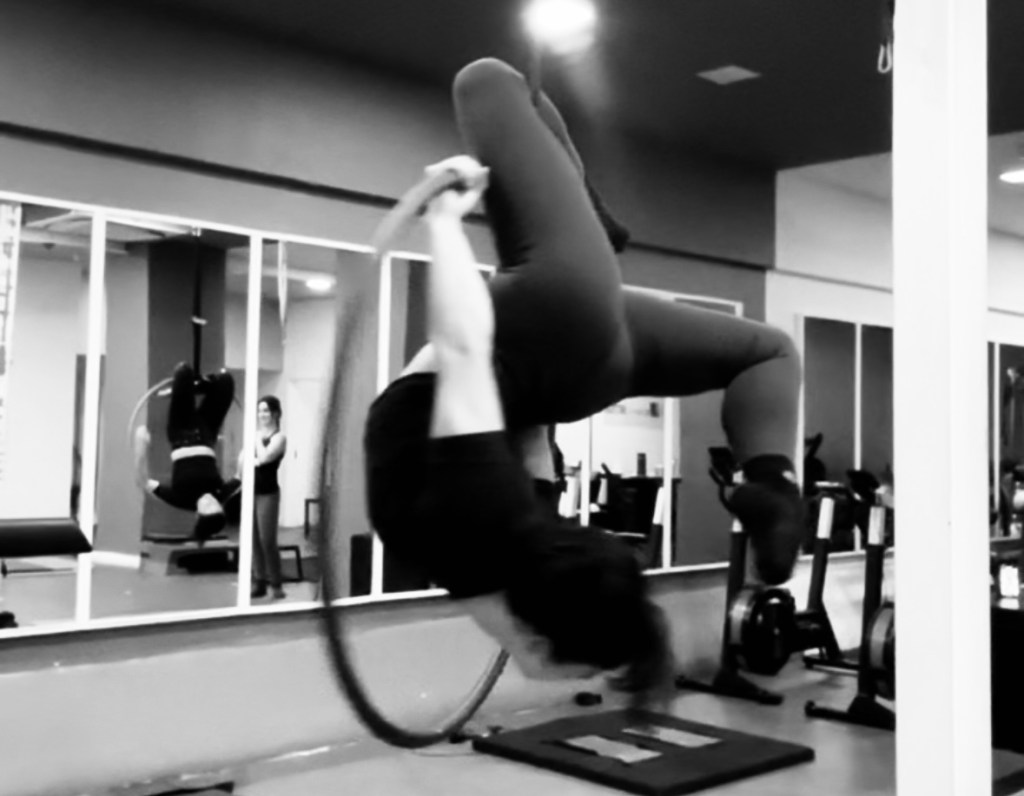
Spin faster!
The aesthetic of aerial hoop encourages a rotational component where the dancer enters in the hoop and initiates its spin. Since the rigging point is connected to the hoop with a swivel, the hoop spins freely. The aeralist must resist the centrifugal force created by rotation, adding an increased demand for postural stability (Dongaz et al., 2024).
The pages below demonstrate biomechanic principles as they apply to aerial hoop performance. First we analyse the hoop’s rotation to understand how aerialists can conserve momentum and maintain the speed of the spin throughout their routines. We then quantify the unique load on aerial performers during entrance into a hoop. Lastly we analyse joint movement and muscles used during a hoop routine while offering guidelines for improved performance.

 Charlotte Telfer-Wan